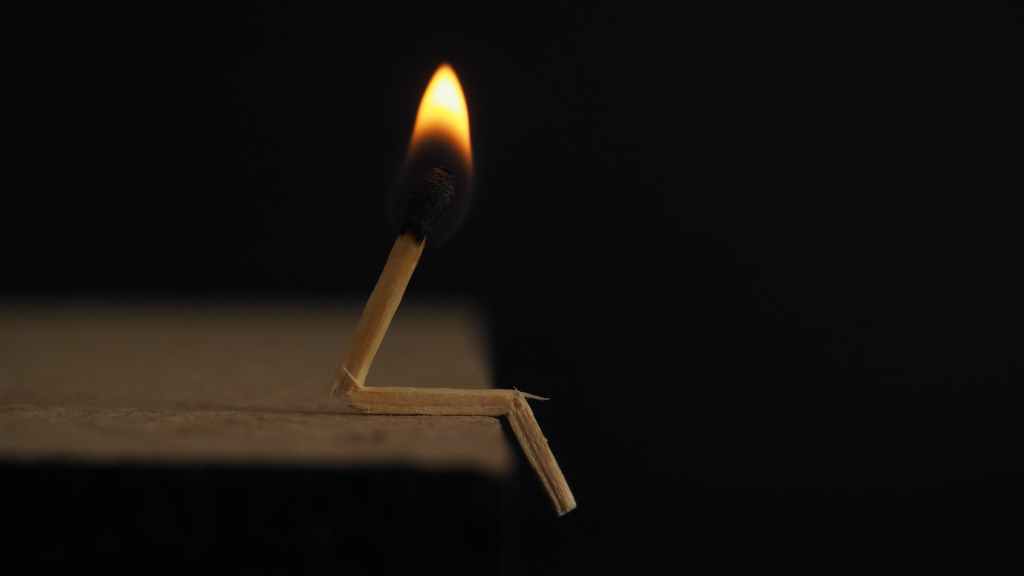
As I begin writing this, I’m semi-procrastinating a writing assignment due in just a few hours, but I can’t find the motivation to do it, so I find myself here. I’m in the point of my semester in which I have to begin making some choices to stay afloat, and it made me dwell on a controversial opinion that I hold: it’s good to experience burnout.
The first thing that needs to be established is that burnout comes in two forms, and people typically associate the term with one form according to how they have, in the past, burnt out or seen others burn out.
Form one:
The first form and, in my experience, the more common type of burnout, is equivalent to the burnout of a tire, when the vehicle exerts a tremendous amount of force and the tires remain stationary, causing excessive damage to the tires. This tends to happen when someone has a short-term goal that might be a little unrealistic, or someone’s long-term goal begins with a great amount of motivation that tapers off, leaving a large amount of workload for the new lowered levels of motivation.
Form two:
The second form is equivalent to the burnout of a match. This type of burnout is slow and often unpredictable. The match provides a steady flame until the very end, when it may suddenly go out completely. In people, this is more commonly seen in two extreme personality types: those with a high drive, and those with a low drive, with the average person tending to experience the first form.
High-drive people, able to withstand more stress and for longer periods of time, will take on large loads and carry them comfortably until they take on too much without realizing, or carry a heavy load too long. Low-drive people, typically aware of their inability to carry large loads, will often carry the bare minimum to get by, refusing to challenge themselves. This bare minimum load may leave the individual unfulfilled and longing for something more, but they’re already at what they believe is the max capacity for their abilities.
Why burnout is good:
No matter the type of stumbling block one faces, they are all good in that they serve as a lesson to be learned. The simple lesson in burnout is how to go further the next time, but there are more lessons available than what people tend to take away.
Beginning with the first form, tire burnout, there is a great lesson to be taught about discipline and emotionally influenced decisions. Suffering from the choice of diving headfirst without looking at the depth of the pool, tire burnout practically spits the swimmer back out before they drown, giving them a chance to collect their thoughts and evaluate what went wrong. Additonally, having already been in the water, they know exactly what it’s like, and can decide to dive again or move on to a different pool.
With the second form, the great lesson is in self-analysis. The high-drive individuals must learn that even though they can carry great loads, rest is important. When they become burnt out, they have the chance to assess everything that was on their back and move forward with only what is necessary. For low-drive people, it gives them a chance to see that they are capable of much more than what they give themselves credit for, and a chance to add to or change their load completely.
Burnout strips individuals down to their most basic needs, since they don’t have the capacity to carry much else. This is a great aid in choosing priorities and knowing what really matters. It’s a forced rest, which, in a culture about speed and distance, is needed. The important part about burnout is recognizing when one is experiencing it and not letting the damage pile up. Some will continue past burnout into burnt, and that’s when true damage takes place.
Next time you begin feeling like you’re burning out, don’t blame yourself or your circumstances, instead, feel the burn and try to locate the cause. Replace your tires, trim your wick, and get back after it with a realigned mind.
The practice I use myself
is pretty old-fashioned, but it works when I really need to make it through a tough time. I write each thing that I feel is a “weight” on my mind, time, or life as a whole on its own sticky note (a list on a sheet of paper works as well). Then, I physically choose things to keep and things to crumble and toss across my room (or cross out). Although it results in a slight mess, I ensure that my sticky notes don’t go in the trash can; I leave them laying on my floor for however long I’m in my rut. The sticky notes I keep alive get posted on my wall and I make sure to tend to those each day to keep myself on what’s important. As I’m recovering and able to take on more, I pick a sticky note out of my pile and place it on my wall with the others. Not only does this help me visualize what I’m choosing, but the physical act of recovering the sticky note makes it feel like I’ve physically accomplished something. After all my sticky notes are up on my wall, I’m ready to keep going full steam ahead with an even clearer focus than before.
“[…] let’s rid ourselves of every obstacle and the sin which so easily entangles us, and let’s run with endurance the race that is set before us,” Hebrews 12:1 (NASB 2020).
 What's Luke Thinking?
Leave a comment